



Why Is Revision Rhinoplasty Actually More Complicated Than a First Rhinoplasty?
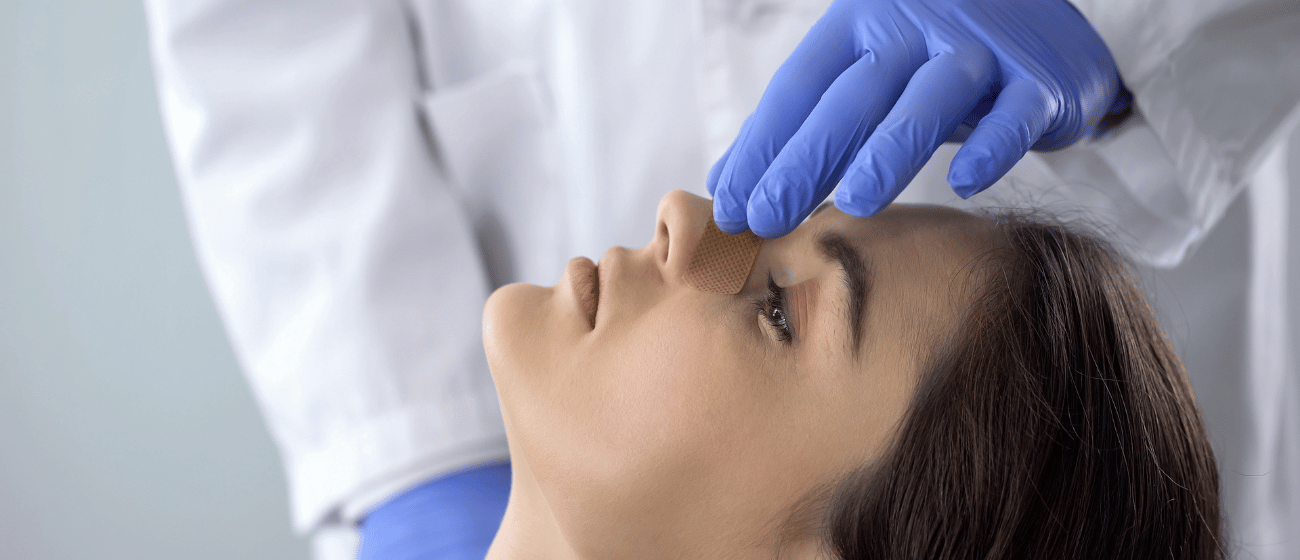
A primary rhinoplasty is performed on tissue that has never been touched by a scalpel, with clear anatomical landmarks and plenty of cartilage available to shape into predictable results.
A revision rhinoplasty starts from a very different place.
The tissue is scarred, with altered blood supply and structures that may have shifted from their original position. Cartilage is often limited too, since some of it was already used during the first surgery.
These differences affect almost every part of a revision rhinoplasty, from how the surgeon approaches the incision to which grafting material is even available to use.
Why Scar Tissue Changes Everything
Scar tissue is thicker and less flexible than normal tissue, and it behaves unpredictably once it is cut into again.
This scarring can also hide the original anatomy from the surgeon, requiring slower, more careful dissection to find normal structures underneath.
Blood supply to the skin is often reduced after a first rhinoplasty as well. That reduced blood flow can affect how well tissue heals during a revision procedure, sometimes slowing recovery compared to a first time surgery.
What Went Wrong the First Time Matters
Understanding what happened during the original surgery is essential before planning a revision rhinoplasty.
A drooping tip, a collapsed nasal valve, a nose narrowed too much, or a crooked bridge all require different corrective approaches.
Old surgical records and photos from before the first procedure, when available, give the surgeon useful information about what the nose looked like both before and after that original surgery.
Without that history, a surgeon has to reconstruct much of that picture through an exam alone.
Why Revision Rhinoplasty Is More Complex Than a First Rhinoplasty
A first rhinoplasty can often be planned from a straightforward exam and photographs.
Revision rhinoplasty typically requires far more planning, since internal nasal structures may already be altered or weakened from the previous surgery.
Many patients who have had prior nose surgery also deal with breathing problems from nasal obstruction. A revision rhinoplasty has to address that function before focusing on appearance.
Why Cartilage Grafting Gets More Complicated
Septal cartilage, the material most commonly used in a first rhinoplasty, is frequently already used up by the time a revision becomes necessary.
Ear cartilage or rib cartilage often serve as alternative sources when that happens.
Choosing the right graft source is one of the more technical decisions in revision rhinoplasty planning.
Rib cartilage requires its own separate incision to harvest, adding a layer of complexity that a first surgery usually does not involve.
What a Revision Consultation Covers
A revision consultation covers your surgical history, your current breathing function, and your specific goals for this second procedure.
Photos from before your original rhinoplasty, if you have them, are genuinely useful to bring along.
Expert surgeon, Dr. Singleton, evaluates both the internal nasal structures and the external appearance of the nose before recommending a plan.
A CT scan is occasionally used for more complex cases to get a clearer look at internal structures.
This level of evaluation reflects his double board certification and fellowship training specifically in facial plastic surgery.
Setting Realistic Expectations for Revision Results
Healing from revision rhinoplasty can take longer, since scar tissue needs more time to settle than tissue from a first surgery.
Results may also be more subtle, especially when the main goal is improving breathing or correcting a specific flaw rather than an overall transformation.
Patients who go in with realistic expectations tend to be the happiest with their results once healing is complete, especially when the original goal was correction rather than dramatic change.
Talk Through Your Options Now to Revise Your Rhinoplasty. Schedule a Consultation With Our Team Today
A complicated case still deserves a clear, honest conversation about what is realistic for your specific nose.
Talk through your history and why a revision may be right for you with our expert today.
Contact Capital Facial Plastic Surgery online or call our office at 240-630-8175 to schedule a consultation with Dr. Adam Singleton.