



Can Ethnic Rhinoplasty Change Your Nose Without Erasing What Makes It Unique?
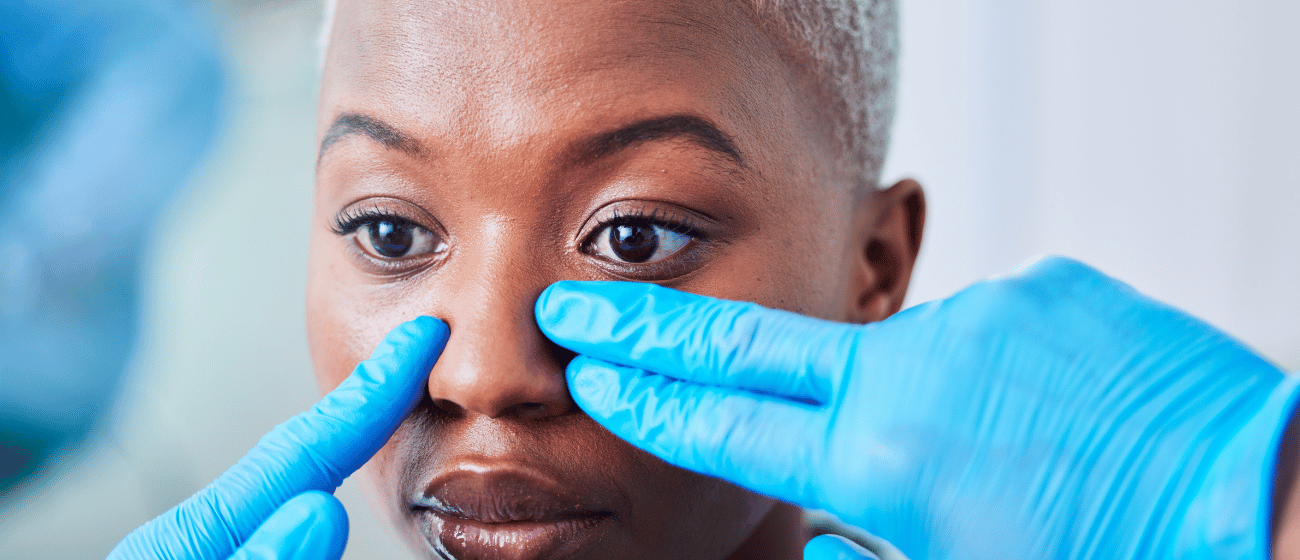
A rounder tip, a wider nasal base, or a gentle dorsal curve are not flaws waiting to be corrected. They are often the exact traits that connect a nose to someone’s heritage and family resemblance.
Ethnic rhinoplasty means making small, careful changes that improve balance without removing those traits.
Change too little, and the concern that brought a patient in never actually gets addressed. Change too much, and the nose stops looking like it belongs on that person’s face.
Here is how Dr. Adam Singleton approaches ethnic rhinoplasty procedures at his Chevy Chase practice.
What Makes Ethnic Rhinoplasty Different From Standard Rhinoplasty
Standard rhinoplasty techniques were largely developed around thinner skinned, narrower nasal structures.
Applying that same approach to a wider bridge, a rounder tip, or thicker skin often produces results that look overdone or oddly generic.
Ethnic rhinoplasty adjusts technique to account for skin thickness, cartilage strength, and the specific proportions common within a patient’s own background, rather than forcing every nose toward one template shape.
A surgeon experienced in this approach also plans incision technique and suture placement differently, since thicker skin responds to scarring and swelling in its own unique way.
Why Preserving Identity Is Central to Ethnic Rhinoplasty
The goal is refinement, not erasure. A nose can be brought into better balance with the rest of the face while still reflecting a patient’s heritage and family resemblance.
Removing too much cartilage or over narrowing a bridge can leave a nose that looks disconnected from the rest of a patient’s features, which is exactly the outcome ethnic rhinoplasty technique is designed to avoid.
A nose that no longer matches the rest of a face can be more noticeable after surgery than the original concern ever was, which is why restraint is often the harder skill to master.
What Structures Get Adjusted Versus Preserved
Common concerns include a wide nasal base, a bulbous or drooping tip, or a dorsal hump, and these can often be addressed without narrowing the nose beyond what looks proportionate on that specific face.
Cartilage grafting is frequently used to support thicker skin from the inside, since skin that heals with less structural support underneath tends to lose definition over time.
Graft material is often taken from the patient’s own septum or ear cartilage, giving the tip and bridge structure that holds up as swelling resolves.
How Dr. Singleton Approaches This Consultation
Our expert, Dr. Adam Singleton, is double board certified and fellowship trained in facial plastic surgery, with a practice built specifically around facial procedures rather than general plastic surgery.
That focus shows up directly in how he evaluates nasal anatomy during a consultation.
Every consultation includes a detailed look at skin thickness, cartilage strength, and how a patient’s nose relates to their other features before any surgical plan gets discussed.
Photos from multiple angles and a discussion of breathing function round out that first visit.
Setting Realistic Expectations for Your Results
Healing timelines can run longer for thicker skin, since swelling takes more time to fully resolve and reveal final results.
Patience during the healing process matters more with ethnic rhinoplasty than with some other rhinoplasty cases, sometimes stretching final results out to a full year.
Bringing specific concerns and photos of noses you find appealing, from within your own family or background, can help communicate your goals clearly during your consultation.
A specific goal, like “reduce the width at the base” or “soften the tip,” leads to a more predictable result than a vague request like “just make it smaller.”
Discuss Your Ethnic Rhinoplasty Goals Today! Schedule a Consultation With Our Expert Now
The right nose job is the one that looks like a more refined version of you, not someone else’s face.
Contact Capital Facial Plastic Surgery online or call our office at 240-630-8175 to schedule a consultation with Dr. Adam Singleton and discuss your options.