



How Do I Know If I’m Ready for a Facelift With Dr. Adam Singleton?
Deciding to have a facelift isn’t as simple as reaching a certain age or noticing your first signs of facial aging.
For some patients, Botox®, fillers or laser skin treatments can still provide the improvement they want. For others, changes such as jowling, sagging through the lower face and loose skin have reached a point where surgery may offer a more appropriate solution.
If you’re considering a facelift with Dr. Adam Singleton, the decision starts with understanding what bothers you, what surgery can realistically improve and whether you’re ready for the procedure and recovery.
Look at What’s Actually Bothering You
A facelift with Dr. Adam Singleton is designed to address sagging tissues and loose skin through the lower face.
You may be ready to discuss facelift surgery if you’ve noticed:
- Jowling or decreasing jawline definition
- Sagging through the cheeks or lower face
- Loose or excess skin
- Deepening facial folds
- Changes along the jawline and neck
These concerns don’t automatically make you a candidate. They do, however, provide a better reason to explore facelift surgery than your age alone.
When Nonsurgical Treatments Aren’t Addressing the Problem
Dr. Adam Singleton performs both surgical and nonsurgical facial rejuvenation procedures, which is important when you’re not sure which direction to take.
Dermal fillers can replace lost volume and Botox® can soften certain dynamic wrinkles. Skin treatments can address concerns such as texture, pigmentation and fine lines.
But these treatments aren’t substitutes for a facelift when the primary problem is significant sagging or laxity.
The goal shouldn’t be to move to surgery as quickly as possible. It’s to identify the treatment that actually matches the changes you’re trying to correct.
Why Consider a Facelift With Dr. Adam Singleton?
Facelift surgery requires an extensive understanding of facial anatomy as well as an appreciation for how subtle changes can affect the appearance of the entire face.
Dr. Singleton focuses specifically on facial plastic surgery and has completed advanced training dedicated to the face, head and neck. After earning his medical degree from the George Washington University School of Medicine, he completed an otolaryngology-head and neck surgery residency at the University of Tennessee Health Science Center.
He then pursued additional fellowship training in facial plastic and reconstructive surgery at The Maas Clinic in San Francisco.
That specialized background allows Dr. Singleton to evaluate facial aging as more than simply a problem with loose skin. The underlying tissues, facial proportions, skin quality and relationship between the face and neck all help determine the appropriate surgical plan.
Your Consultation Isn’t a Sales Pitch for Surgery
One of the most important parts of deciding whether you’re ready for a facelift is getting an objective assessment of what will actually address your concerns.
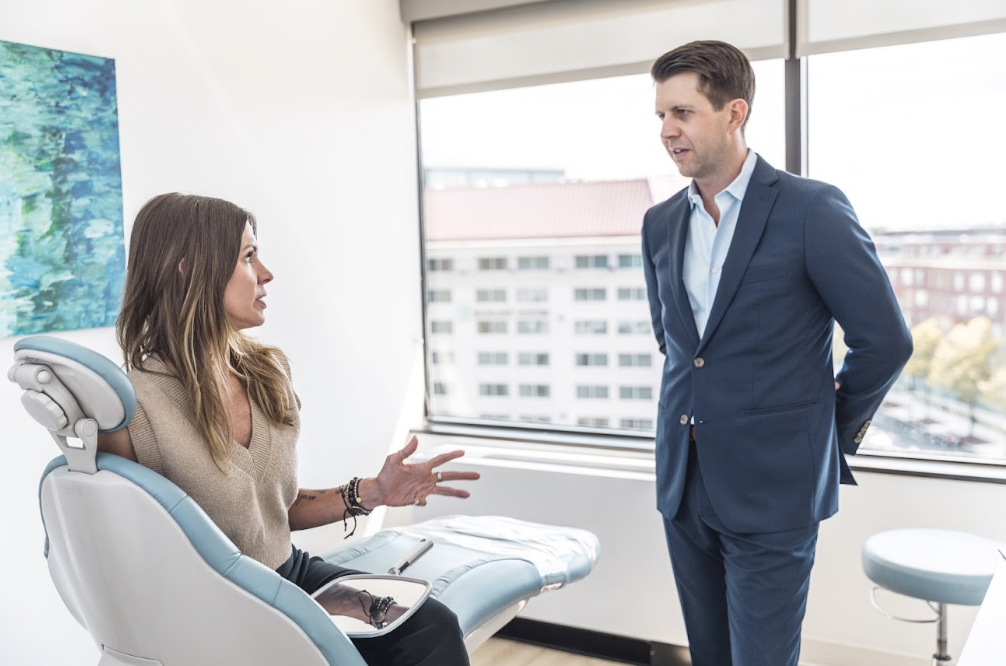
Dr. Singleton personally sees his patients and emphasizes one-on-one conversations about their goals, available options and the advantages and limitations of each approach.
That may lead to a facelift recommendation, but it doesn’t have to.
If your concerns can still be effectively addressed with fillers, Botox®, laser treatments or another nonsurgical option, those treatments may make more sense. If surgery is appropriate, Dr. Singleton can explain what type of procedure is likely to provide the improvement you’re seeking.
Being Healthy Enough for Surgery Matters
Facelift candidacy isn’t determined by appearance alone.
Your overall health, medical history, medications and ability to heal safely all have to be considered before elective surgery. Smoking can also interfere with wound healing and increase the risk of complications.
This is another reason there isn’t a universal “best age” for a facelift. Two patients of the same age may have completely different facial anatomy, medical histories and treatment needs.
You Also Have to Be Ready for Recovery
Being a good surgical candidate and being personally ready for surgery aren’t necessarily the same thing.
Facelift recovery involves swelling and bruising, and you’ll need to temporarily limit certain activities while you heal. Although much of the initial swelling improves during the first several weeks, healing continues beyond the point when you feel comfortable returning to work or social activities.
Before scheduling surgery, you should understand the expected recovery timeline, arrange for appropriate help and be comfortable following postoperative instructions.
What Should You Expect From Your Results?
A successful facelift with Dr. Adam Singleton shouldn’t make you look like a different person.
The objective is to improve visible signs of facial aging while maintaining the characteristics that make your face recognizable as your own.
Dr. Singleton’s treatment philosophy emphasizes realistic goals and a surgical plan tailored to the individual patient rather than applying the same approach to every face.
A facelift also doesn’t stop the aging process. Your face will continue to age after surgery, but the improvements achieved through the procedure can be long lasting.
Are You Ready for a Facelift With Dr. Adam Singleton?
You don’t have to answer that question by yourself.
If sagging, jowling or other changes to your lower face are bothering you, a consultation gives you an opportunity to find out what is causing those changes and what can realistically be done about them.
If you’re considering a facelift with Dr. Adam Singleton, contact Capital Facial Plastic Surgery online or call our office at 240-630-8175 to schedule a one-on-one consultation with Dr. Singleton.